The identity of an object outlives its craft
Most cloisonné writing stops at "this is how it is made". If you stop there, you miss the unusual part. Cloisonné is one of very few Chinese crafts that has, over six centuries, changed identity five times.
It has been a ritual vessel for ancestral halls. It has been imperial-only court display. It has been the diplomatic gift the empire sent to visiting kings. It has been the souvenir stocked in Bond Street shops in the 1920s. And it has been a state-listed intangible heritage object since 2006.
Same craft. Same enamel colours. Different identity, different room, different hands receiving it, different gaze placed on it. This essay is about that, not about how the wires get bent.
Five tiers, laid out as a clickable ladder
Cloisonné's six-century identity history collapses to five tiers. Click any of them to jump to the section below.
Foreign envoys, tributary kings, lamas
Large scale, dense pattern, heavy gilding
Click any tier to jump to its section. The same craft. Five identities in six centuries.
Ritual vessel — the first identity
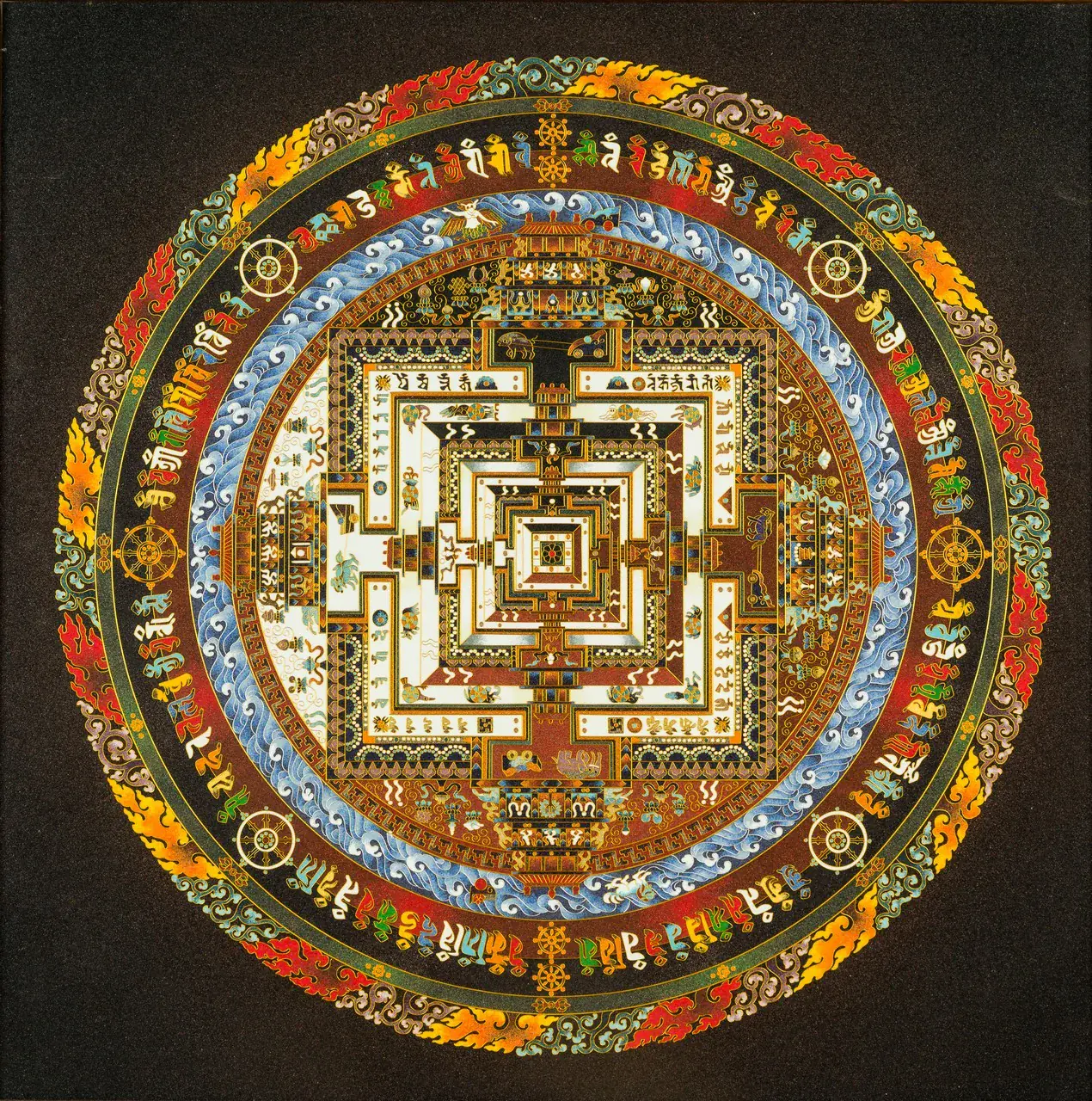
When wire-bound enamel first surfaced at the Yuan and early Ming courts, it did not arrive as "a beautiful object". It arrived as a ritual vessel.
Ritual vessels are a specific class in the Chinese object system — not for daily use, made for ancestral halls, state rites and imperial ceremony. Shang and Zhou bronze tripods, Han and Tang jade discs, Song ritual ceramics all belong to this lineage. Cloisonné entered China and was filed directly into it.
Two reasons. It came from far away (Persia, Da Shi), which gave it the aura of "foreign and costly". And it required wire inlay, mineral enamel and kiln firing — too elaborate for ordinary objects. The combination placed it on the most formal furniture of palace life: censers, candle stands, ritual stupas, ancestral display — not teacups, not wine vessels.
The gravity people still feel in front of a cloisonné piece today was set in this period. The weight is not from the craft. It is from the original identity the craft was given.
Imperial-only — locked into a reign name
In 1456, year 7 of Jingtai, the identity shifted from "ancestral hall vessel" to "imperial private object".
The Jingtai emperor had an obsessive preference for one deep blue, which the workshop nicknamed "Jingtai imperial blue". He placed copper cloisonné objects in this colour into the category of imperial-only goods — used by the palace, forbidden to be owned by ordinary households. Owning one as a court official was a status overreach.
This was a status upgrade. Ritual vessels were grave but could be possessed by any aristocratic household. Imperial-only objects were the emperor's alone. From that point cloisonné carried an imperial signature.
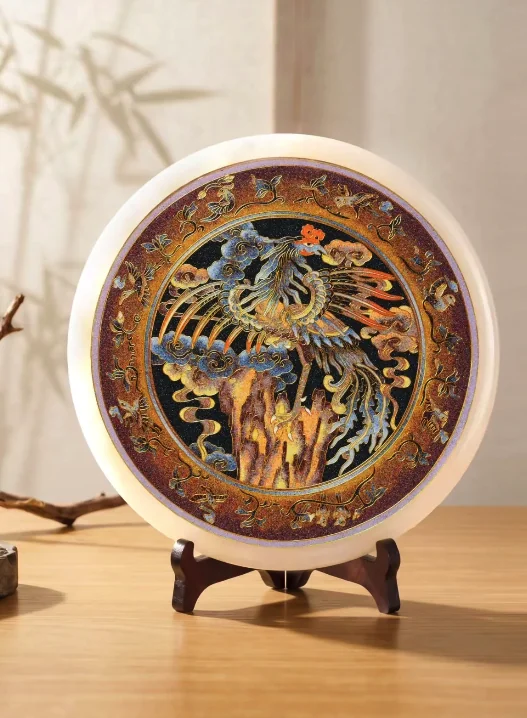
Under Qianlong (r. 1736–1795) this identity reached its peak. The Yangxindian Enamel Workshop produced cloisonné on a scale unmatched before or since: large, densely patterned, heavily gilded. The craft became almost a visual synonym for "court".
State gift — from court possession to diplomatic instrument
Mid-to-late Qianlong is when cloisonné completed its most important identity shift: from "what the emperor keeps" to "what the empire sends".
Qianlong used cloisonné as the standard state gift to visiting tributary kings, foreign envoys and senior religious figures. A significant share of Qing-era cloisonné now in the British Museum, the Louvre and the Hermitage entered those collections through this diplomatic route.
A state gift is a specific identity. It means the object no longer represents the artisan — it represents the country. When a foreign king accepted a cloisonné censer, what he was accepting was not a craft but "the highest aesthetic register China was prepared to send abroad".
This "represents China" identity has not broken since. After 1949, cloisonné vases reappeared as state gifts on diplomatic occasions; pieces in cloisonné technique have surfaced again at international summits. Few crafts in the world have held that identity continuously for six centuries.
Export object — the identity collapses
When the imperial workshop system fell apart at the end of the Qing, the artisans dispersed into private workshops producing for European trading houses.
This is the period of sharp fall — from "state gift" down to "shop merchandise".
Work shrank to overseas taste: smaller vessels, simpler subjects, fragmented patterns, uneven quality. Cloisonné lost its imperial status and became a generic "Chinese craft object" shelved next to cheap silk and lacquer on Bond Street, Madison Avenue and Rue de Rivoli, sold by the unit.
This was its first identity loss in six centuries. The aftershock is still here: when most Westerners hear "cloisonné" today, the image that comes to mind is the small enamelled bottle from a 1920s Shanghai export shop — not Jingtai, not Qianlong.
One quiet lesson: a craft's identity is not held up by the craft itself. Craft is the floor. The identity requires a system around it — imperial workshops, court protocol, diplomatic gifting. Take that system away, and even excellent craft falls back into "ordinary merchandise".
Intangible heritage — named by the state for a second time
1956: the People's Republic rebuilt the cloisonné industry, reassembled the dispersed artisans, and restored the full body-to-gilding workflow. Cloisonné was re-classified as "traditional Chinese decorative arts" — its first lift back.
2006: cloisonné craft was inscribed on the first national list of Intangible Cultural Heritage. This is the second time the Chinese state has formally named the craft — the first was Ming Jingtai in 1456, the second was the modern Chinese state, exactly 550 years later.
But "intangible heritage" is an identity that answers only one question — does the craft exist? — not the harder one: where does it live today? Most cloisonné people encounter now sits at two extremes: cabinet objects in museums, or tourist souvenirs. The first is too far. The second is too light.
The craft needs a sixth identity.
Contemporary — putting it back where it originally lived
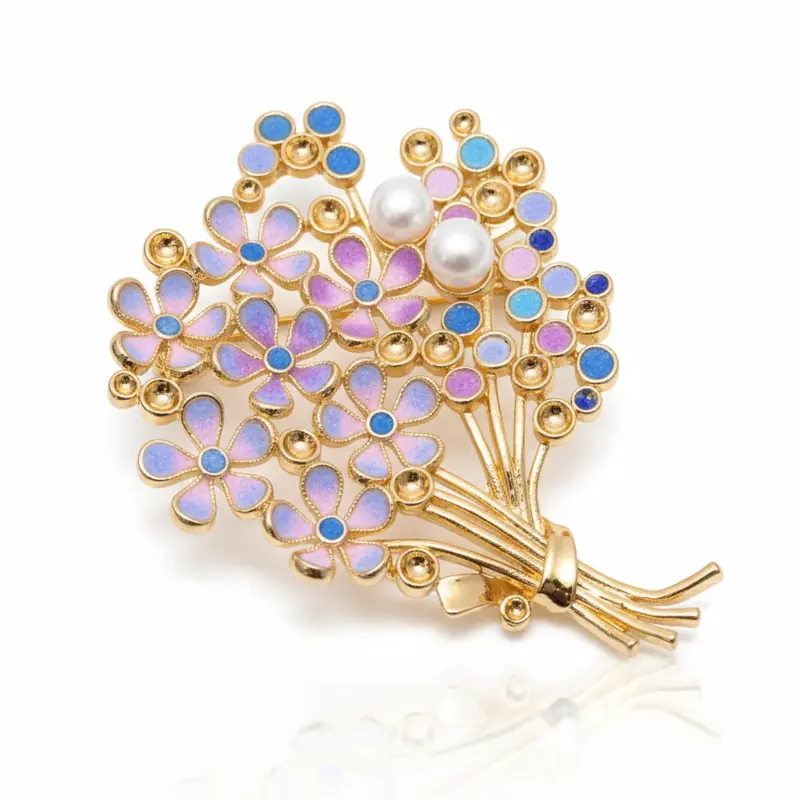
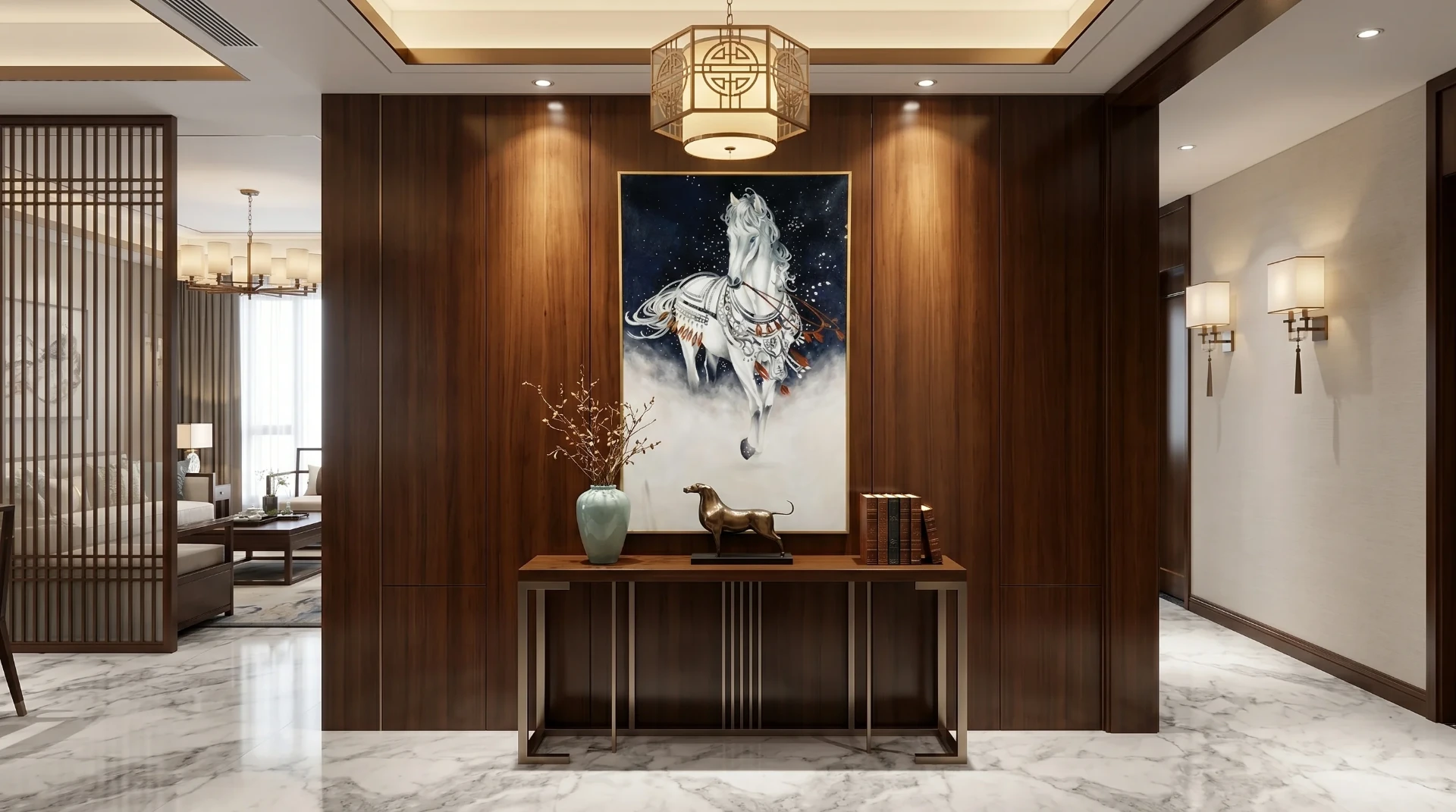
The work at Linghua is to put cloisonné back into its original rooms — collecting, interior display, serious gifting, contemporary oriental life.
This is not a reproduction project. The Ming imperial workshop and the Qing Yangxindian system will not return. It is a relocation project. A six-century-old craft is being pulled out of the two extremes — museum vitrine and souvenir counter — and placed back into the collector's lounge, the brand reception room, the gift exchanged between people whose relationship has weight.
When a contemporary cloisonné piece is chosen as a housewarming gift, an opening gift or a gift for a visiting delegation, it carries the sum of six centuries of identity — the gravity of ritual, the refinement of imperial use, the weight of state gifting, the continuity of heritage. Few other oriental crafts can offer that context.
This is why Linghua keeps insisting that "oriental enamel belongs in contemporary life" is not a slogan — it is the most accurate place for the craft to sit in this decade.
What five identity shifts tell you about craft
Strung end to end, the five identities give you a quietly unforgiving rule about craft and culture:
A craft survives in history not because of how fine it is, but because some era was willing to give it an identity.
Cloisonné is here today not because its technique was sharper than its contemporaries — it is here because, across six centuries, five different eras kept assigning it a new identity. Ritual vessel, imperial-only, state gift, export object, intangible heritage — each shift kept the craft alive by giving it a new reason to be in the room.
When we talk about "lineage", this is the part most often missed. It is not enough to preserve the craft. Someone has to keep finding it a new identity — otherwise even excellent craft becomes a museum entry and nothing else.
Three places to continue
- UNDERSTAND THE CRAFT→ What is cloisonné · the craft essay
Gold wire, mineral enamel, seven firings — how the technique itself is built.
- SEE THE FULL TIMELINE→ 600 years of cloisonné, in one scroll
A draggable dynasty timeline covering the same six centuries, from Yuan Da Shi Yao to contemporary heritage.
- THE NAME ITSELF→ What is jingtailan · culture essay
How the reign name «Jingtai» got locked onto a craft, and why people still call its colour "the colour of China".
Frequently asked questions
- Has cloisonné really been used as a state gift?
- Yes, repeatedly. From Qing Qianlong onward, cloisonné was the standard diplomatic gift sent to visiting tributary kings, foreign envoys and senior religious figures. A significant share of Qing cloisonné now in the British Museum, Louvre and Hermitage entered those collections via this diplomatic route. After 1949, cloisonné continued to appear as state gifts on important diplomatic occasions, and pieces in cloisonné technique have surfaced again at international summits. The «state gift» identity has held continuously for six centuries.
- How many identities has cloisonné had?
- Linghua compresses six centuries of identity into five tiers: ritual vessel (Late Yuan / Early Ming — used in ancestral halls and state rites), imperial-only (Ming Jingtai through Early Qing — palace use only), diplomatic gift (Qing Qianlong — sent abroad as state gift), export object (Late Qing / Republican — produced for European trading houses), and intangible heritage (Contemporary — inscribed on the national list in 2006). Same craft, different identity, different room, different gaze.
- Why is cloisonné called a «ritual vessel»? How is that different from an ordinary craft object?
- Ritual vessels are a specific class in the Chinese object system — not for daily use, reserved for ancestral rites, state ceremony and palace display. Shang and Zhou bronze tripods, Han and Tang jade discs, Song ritual ceramics belong to this lineage. When cloisonné first appeared at the Yuan and early Ming courts it was filed directly into this lineage and placed on the most formal furniture of palace life — censers, candle stands, ritual stupas. The gravity people still feel in front of a cloisonné piece today comes from that original identity.
- Why did cloisonné lose status during the Republican era?
- With the collapse of the imperial workshop system, the artisans dispersed into private workshops producing for European trading houses. Subjects flattened, patterns fragmented, scale shrank, quality became uneven. Cloisonné fell from «state gift» to «shop merchandise» and was sold by the unit next to cheap silk and lacquer on Bond Street, Madison Avenue and Rue de Rivoli. This is its first identity loss in six centuries and the reason most Westerners, hearing «cloisonné» today, still picture a small 1920s export bottle.
- When was cloisonné inscribed as Chinese intangible heritage?
- 2006. Cloisonné craft was inscribed in the first national list of Intangible Cultural Heritage. This is the second time the craft has been formally named by a Chinese state — the first was Ming Jingtai in 1456, the second was the modern Chinese state, exactly 550 years later.
- Why continue making cloisonné today?
- Because «intangible heritage» as an identity only answers «does the craft exist» — not the harder question of «where does it live today». The work at Linghua is to pull cloisonné out of the two extremes of museum vitrine and tourist souvenir, and put it back into collecting, interior display and serious gifting, which is where it originally belonged.
- Can a contemporary cloisonné piece still carry the weight of «state gift»?
- When a contemporary cloisonné piece is chosen as a housewarming gift, an opening gift, or a gift for a visiting delegation, it carries the sum of six centuries of identity — the gravity of ritual, the refinement of imperial use, the weight of state gifting, the continuity of heritage. Few other oriental crafts offer that context, which is why cloisonné continues to hold a distinct place in serious gifting today.