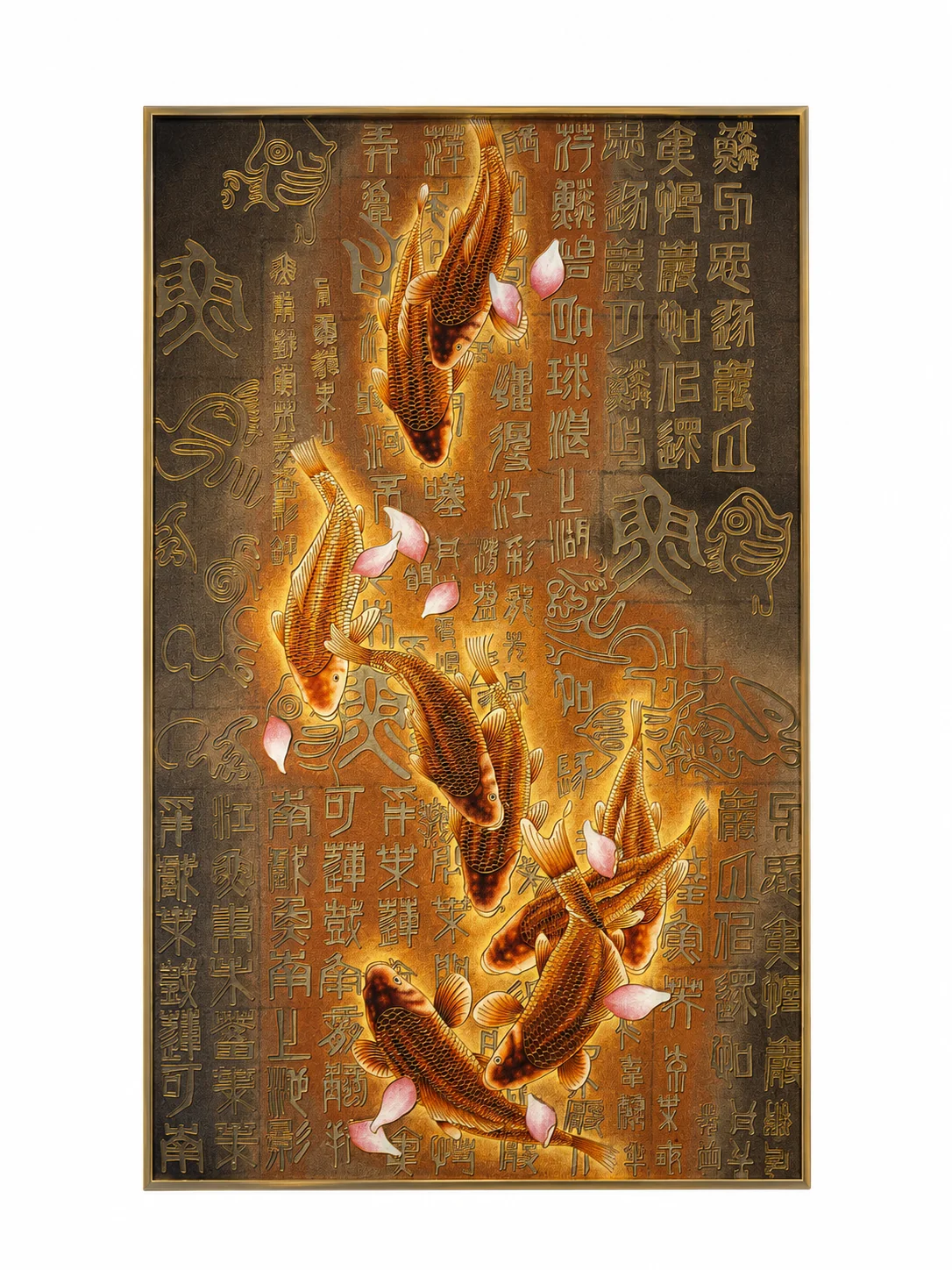
Qi Baishi · Lychee
Lingnan-subject milestone
Qi Baishi’s brush-spirit rendered in gold wire; the red of Lingnan lychee fully realised in the cloisonné language for the first time.
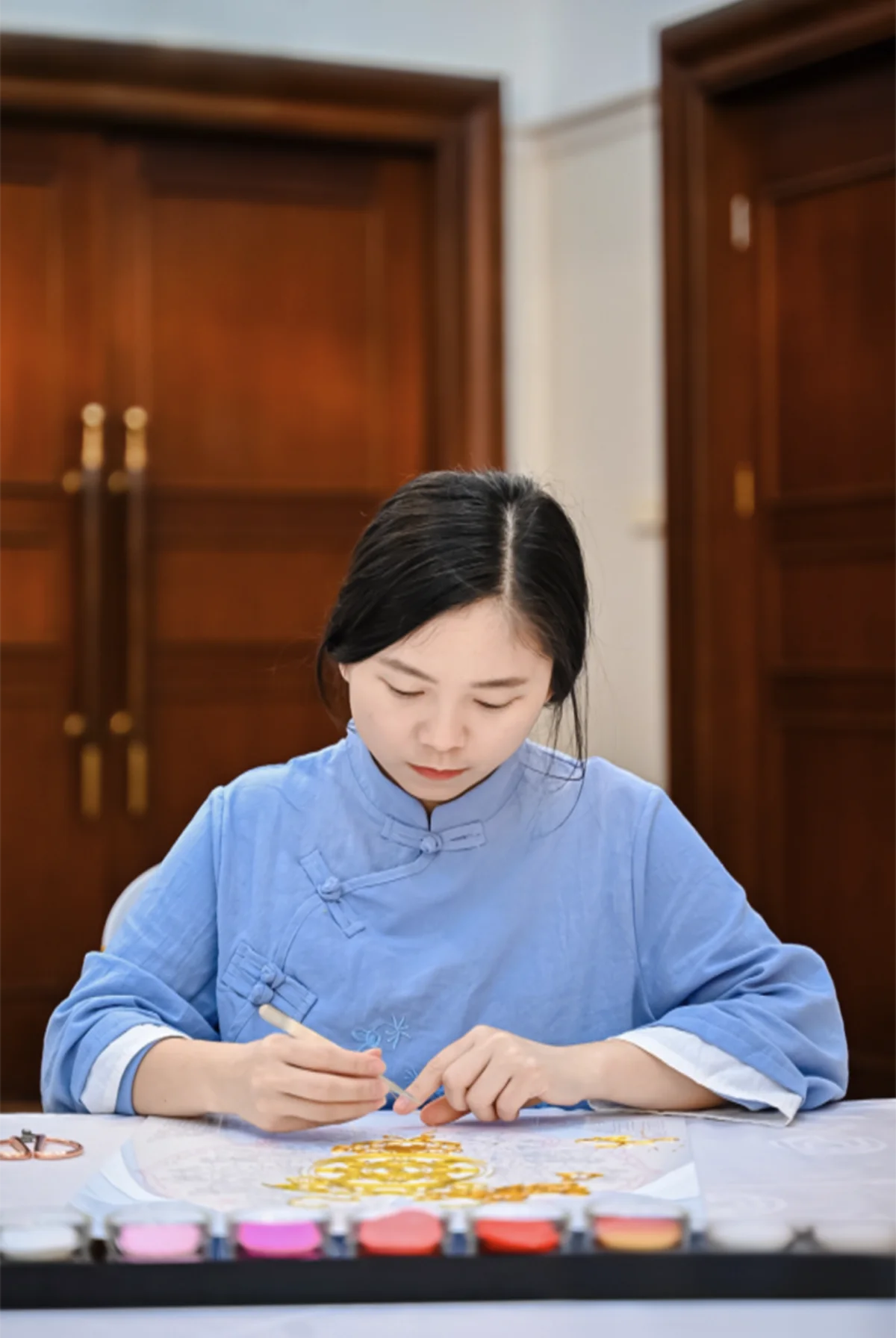
Linghua (given name Deng Shan, 邓汕) is a contemporary Chinese cloisonné artist working in Lingnan cloisonné painting — a Southern-Chinese school of Jingtailan that lets enamel live on wood panel and framed canvas rather than only on a copper vessel. Fifth-generation core inheritor of the lineage, certified Master Artisan and council member of the Guangdong Arts & Crafts Association, she developed the cold-set cloisonné glaze process — a room-temperature setting technique that frees the craft from the kiln, and the foundation of Linghua Culture (Guangzhou, 2017).
"With the warmth of these hands,
I keep the Lingnan enamel fire alive."
BORN
Birthplace
1987 · Zhaoqing, Guangdong
GIVEN NAME
Real Name
Deng Shan (邓汕)
LINEAGE
Master
Ren Jihong · 4th-generation
GENERATION
Inheritance
Lingnan cloisonné painting · 5th gen.
PRACTICE
In the craft
18 yrs · thangka 2008 · cloisonné 2009
CRAFT
Specialism
Wire-inlay · enamel-pointing · cold-set glaze
TITLE
Recognition
Master Artisan · Council, GD Arts & Crafts Assoc.
SIGNATURE
Signature work
Qi Baishi · Lychee · Phoenix’s Rebirth
Classical Jingtailan is bound to a copper body and an 800 °C kiln — and so the craft has been bound to the workshop. Building on three centuries of Cantonese painted-enamel, Linghua spent a decade in material trials and developed the Gu-You cold-set glaze process: an organic-polymer binder that cures the enamel at room temperature, with no firing. One change in process — and cloisonné painting could finally leave the kiln for classrooms, galleries and the contemporary interior.
"A craft is not meant to be enshrined. It is meant to keep being made."
The mane of the lion dance, the brushwork of Cantonese opera masks, the red of lychee and kapok, the Pearl River skyline — Linghua washes Cantonese painted-enamel colour between the gold wires, softening the gradients and resolving the rigid line and abrupt colour shifts of older Jingtailan. The body of work has since taken National Gold at the 20th and 22nd Shenzhen ICIF, plus Gold at the Lingnan Craftsman Cup, the Lotus Award and the Chao Craft Cup; "Phoenix’s Rebirth" entered the permanent collection of the Guangdong Arts & Crafts Museum. Lingnan cloisonné painting now stands as a distinct artistic language.
From a birth in Zhaoqing to a fifth-generation core inheritor of Lingnan cloisonné painting — a single line across thirty-eight years: pulling an ancient craft, once locked inside a kiln, back into contemporary life.
Born Deng Shan; grew up immersed in Lingnan folk culture and traditional crafts.
Apprenticed to Master Sangpei at the Jokhang Temple, training in traditional Tibetan thangka painting — the foundation for her later command of Eastern religious imagery and colour.
Travelled across China studying wire-inlay, enamel-pointing and kiln-firing under leading cloisonné masters.
After years of formula and material trials, replaced high-temperature kiln firing with an organic-polymer setting agent, allowing the enamel colour and texture to set at room temperature.
Based in Panyu, began systematically codifying the craft, teaching and lineage of Lingnan cloisonné painting.
Established a permanent public-facing intangible-heritage experience space inside Panyu Lingnan Impression Park.
Opened a second transmission base inside the Greater Bay Area artisan cluster.
Launched cloisonné craft courses with Jinan University and other universities; received Gold at the 7th GBA "Lingnan Craftsman Cup".
"Phoenix’s Rebirth" entered the permanent collection of the Guangdong Arts & Crafts Museum. The same year: National Gold at the 20th Shenzhen ICIF, Gold at the 2024 Greater Bay Area "Lotus Award", and Gold at Guangdong (Chaozhou) "Chao Craft Cup".
Formally apprenticed to Ren Jihong, the fourth-generation inheritor of Lingnan cloisonné painting, becoming a fifth-generation core inheritor. Featured by People’s Daily (overseas edition), Phoenix Television and other major outlets.
"The Craft of Lingnan Cloisonné Painting" received National Gold at the 22nd Shenzhen ICIF and entered the district-level intangible-cultural-heritage representative-project nomination process in Panyu.
From national gold awards to provincial museum collections, from Lingnan folk subjects to cloisonné thangka — the following works mark the artistic language Linghua has built across each genre.
Lingnan-subject milestone
Qi Baishi’s brush-spirit rendered in gold wire; the red of Lingnan lychee fully realised in the cloisonné language for the first time.
Guangdong Arts & Crafts Museum · permanent collection
A phoenix as the Eastern image bridging life and death; cold-set glaze supports the large-format panel without any kiln firing.
Lingnan folk series
Dense wire-work shapes the lion’s mane; vermilion mouth and gold-set eyes — the spirit of Lingnan festivities in a contemporary register.
Lingnan opera-culture series
The line-drawing grammar of opera face-painting translated into the rhythm of metal wire; glaze preserves the thickness of stage paint.
Collector-grade cloisonné thangka
Tibetan thangka composition meets Lingnan enamel colour; the Heart Sutra is set character by character in the finest gold wire.
City-culture gift series
From the Zhenhai Tower to the Canton Tower — city memory rendered as a collectable, giftable enamel painting.
Five works, each holding a national or provincial gold award. Lingnan cloisonné has thus moved from craft to an artistic language re-confirmed by the official adjudication system.
20th Shenzhen ICIF · National Gold Award (Arts & Crafts Cultural Creativity)
7th GBA Arts & Crafts "Lingnan Craftsman Cup" · Gold
2024 Greater Bay Area Arts & Crafts "Lotus Award" · Gold
2025 Greater Bay Area Arts & Crafts "Lotus Award" · Gold
Guangdong (Chaozhou) Intangible Heritage Crafts "Chao Craft Cup" · Gold
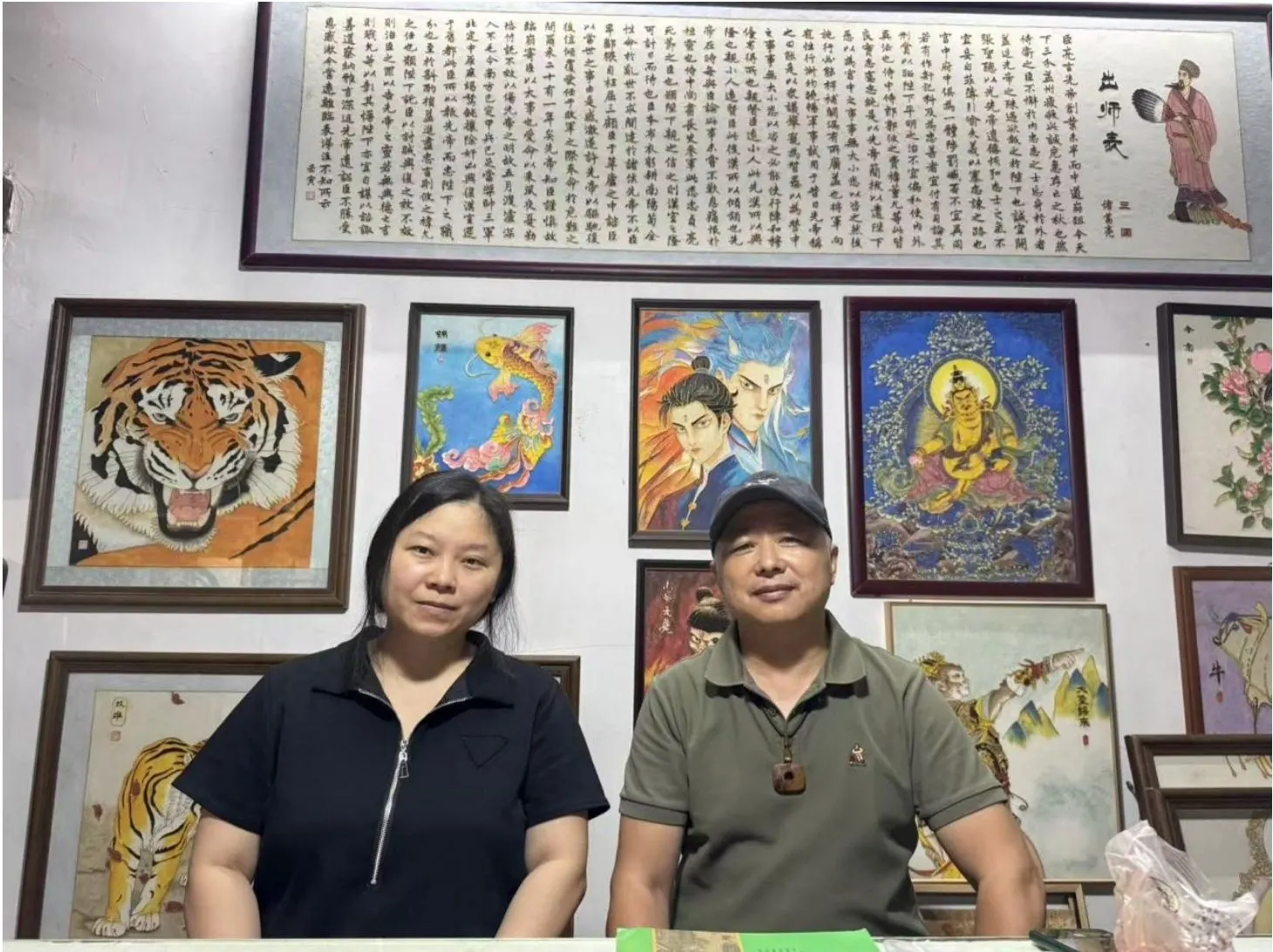
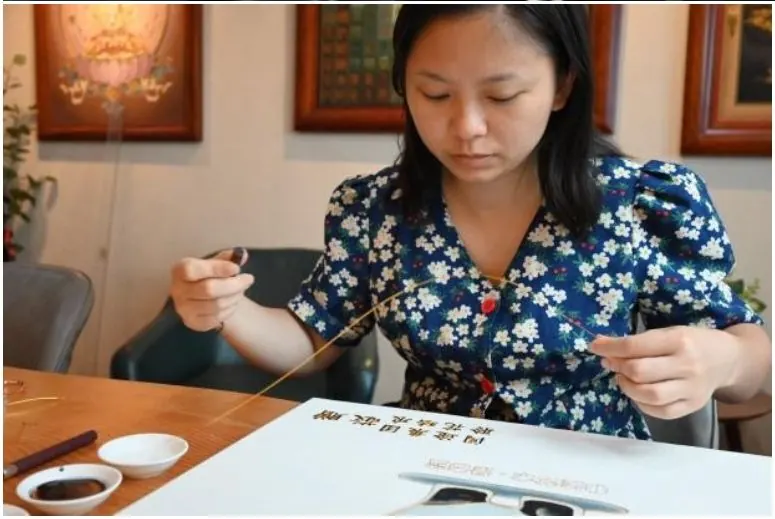
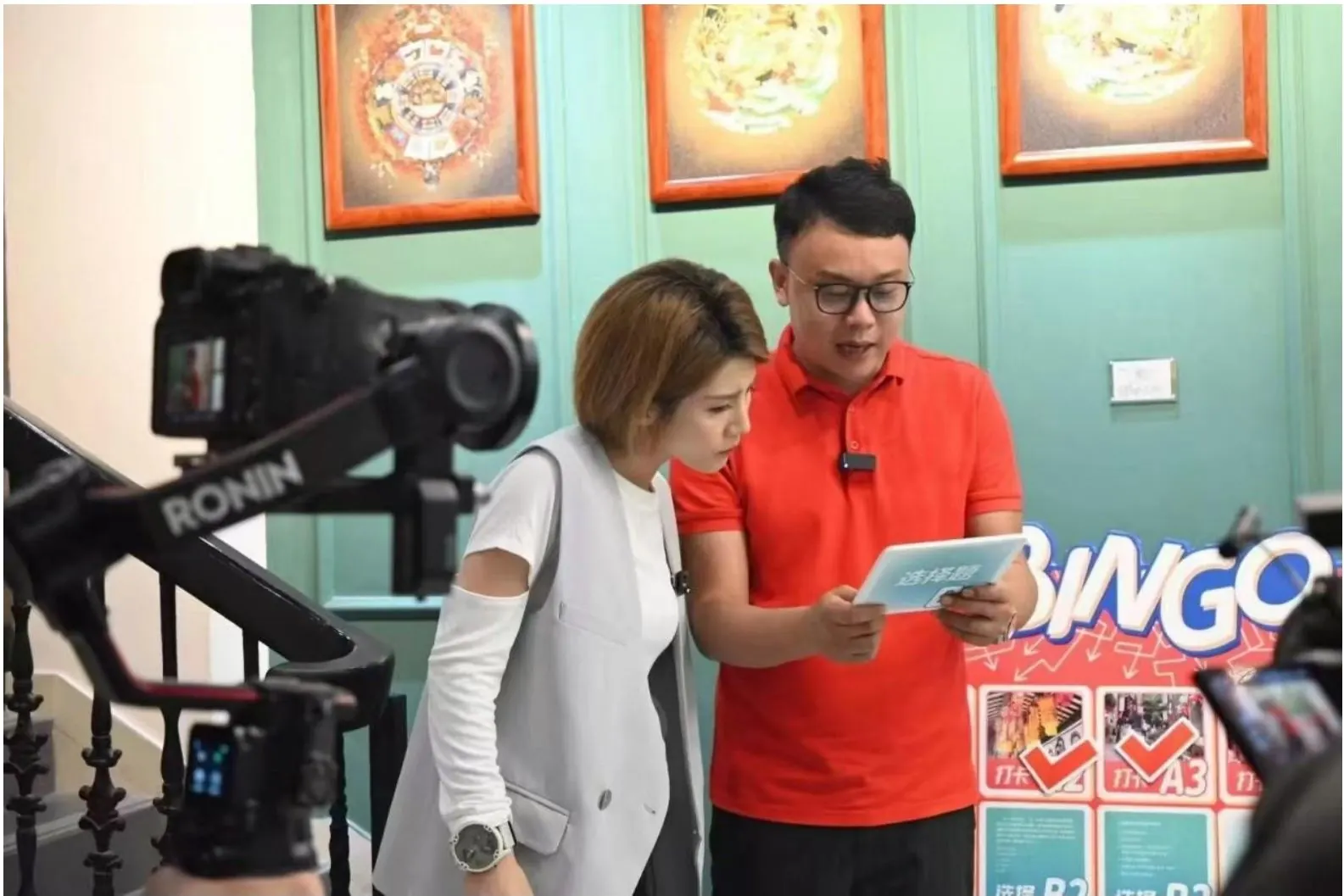
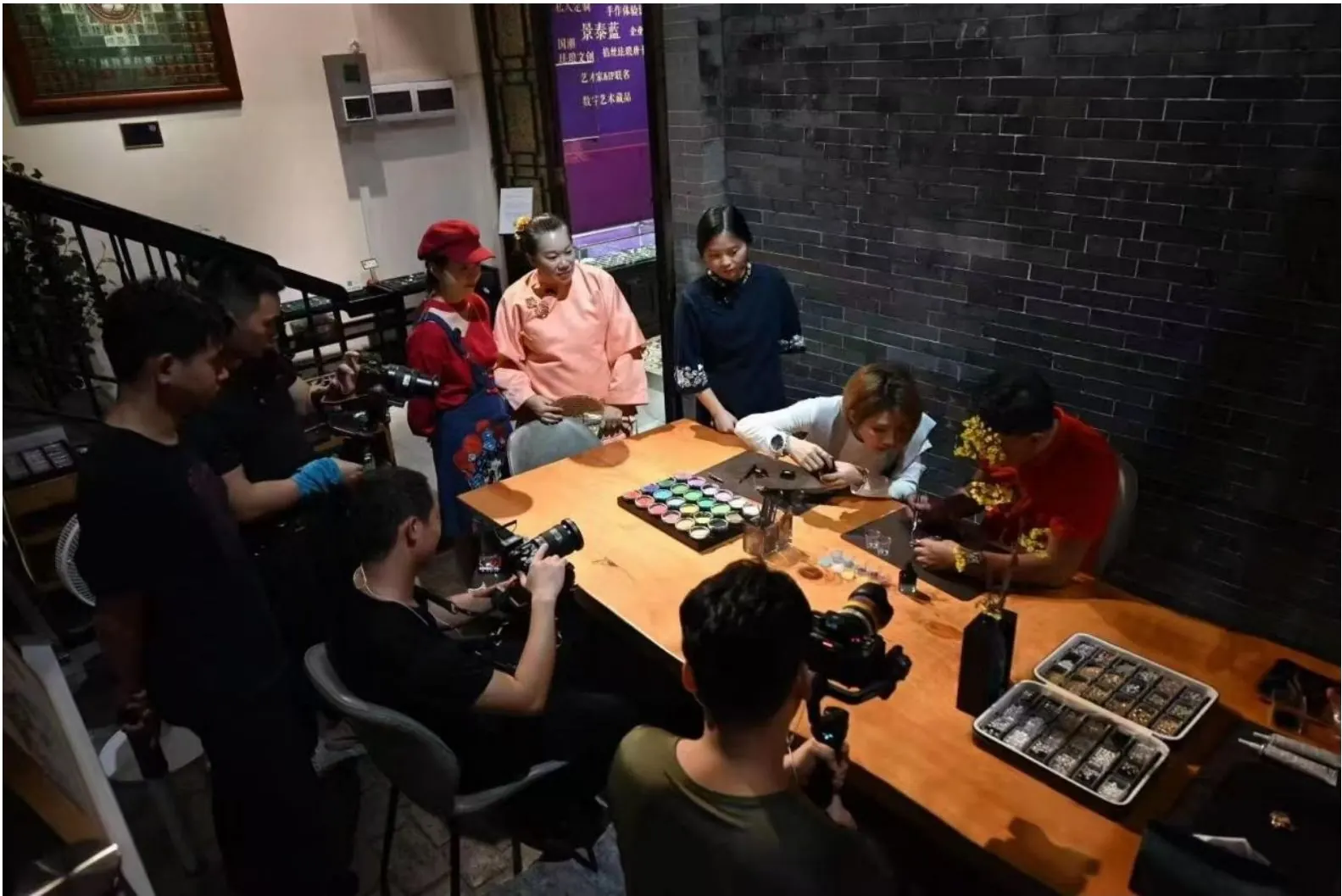
From lineage portraits to gifts exchanged between makers, from TV cameras to the studio floor — the real images Lingnan cloisonné leaves behind once it steps out of the kiln.
The eight questions most often asked about Linghua\u2019s identity, lineage, craft, works and classes — answered directly from the public record.
Cloisonné enamel painting is a Chinese metal-and-glass craft in which fine gold or copper wires (cloisons) are bent into a design and the enclosed cells are filled with coloured enamel. Linghua works in Lingnan cloisonné painting — a Southern-Chinese school that fuses Cantonese painted-enamel colour with the wire-inlay of classical Jingtailan, and that — through her cold-set glaze process — can be made on wood panel and framed surfaces rather than only on a copper body.
Jingtailan (景泰蓝) is the Northern-Chinese cloisonné tradition: enamel on a copper body, fixed by repeated firings at ~800 °C. Lingnan cloisonné painting keeps the wire-inlay grammar of Jingtailan but borrows the colour-wash of Cantonese painted-enamel and replaces the kiln with Linghua’s cold-set glaze process. The result reads like a painting rather than a vessel, with softer gradients and looser subject matter — Lingnan folk life, landscape and contemporary city imagery.
Four stages: (1) line drawing — the composition is drawn onto the support; (2) wire-bending — flattened gold or copper ribbon is bent by hand into the cloisons and adhered along every line; (3) enamel-pointing — coloured enamel paste is filled cell by cell, often layered to build gradients; (4) setting — classical Jingtailan fires the piece in a kiln, while Linghua’s cold-set glaze process cures the enamel at room temperature with an organic-polymer binder. The piece is then ground, polished and finished.
Linghua (given name Deng Shan, 邓汕) is a contemporary Chinese cloisonné artist, born 1987 in Zhaoqing, Guangdong. She is the fifth-generation core inheritor of Lingnan cloisonné painting, a certified Master Artisan, a council member of the Guangdong Arts & Crafts Association, and the founder of Guangzhou Linghua Culture Communication Co., Ltd. (2017). Her practice combines Cantonese painted-enamel, northern wire-inlay and her own cold-set glaze process.
Linghua first studied traditional thangka painting under Master Sangpei at the Jokhang Temple in Lhasa in 2008. From 2009 she travelled across China studying wire-inlay, enamel-pointing and painted enamel under leading cloisonné masters. In 2025 she was formally apprenticed to Ren Jihong, fourth-generation inheritor of Lingnan cloisonné painting, becoming a fifth-generation core inheritor.
National Gold at the 20th and 22nd Shenzhen ICIF (Arts & Crafts Cultural Creativity), Gold at the 7th GBA "Lingnan Craftsman Cup", Gold at the 2024 Greater Bay Area "Lotus Award", and Gold at the Guangdong (Chaozhou) "Chao Craft Cup". Her work "Phoenix’s Rebirth" was acquired by the Guangdong Arts & Crafts Museum for its permanent collection (2024). She also holds the certified Master Artisan title and is the nominee for the district-level intangible-heritage project "Craft of Lingnan Cloisonné Painting".
"Qi Baishi · Lychee" (Shenzhen ICIF National Gold), "Phoenix’s Rebirth" (Guangdong Arts & Crafts Museum collection), the "Awakening Lion" and "Cantonese Opera Masks" series, the "Avalokiteshvara Mandala" cloisonné thangka, and the "Guangzhou Landmarks" gift series.
In-person sessions run at the Linghua Cloisonné Studio inside Lingnan Impression Park (Panyu, Guangzhou), at the Luodong Artisan Town branch (Conghua) and at the Linghua Heritage Promotion Centre (Shenzhen). Linghua also leads intangible-heritage coursework at Jinan University and other Guangzhou universities. Individuals, families, corporate teams and cultural institutions can book through the Linghua Culture website.